

Two-Wheel Drive and All-Wheel Drive Vehicle
Choosing your next vehicle involves many important decisions, and one of the most critical is selecting the right drivetrain. The choice between a two-wheel drive (2WD) and an all-wheel drive (AWD) system directly impacts your car's performance, fuel economy, and handling in various weather conditions. Understanding the fundamental differences is the first step toward making an informed choice. A 2WD vehicle sends power to either the front or rear wheels, while an AWD system can deliver power to all four wheels simultaneously for enhanced traction. Your local climate, daily commute, and even your budget play significant roles in determining which option is the best fit for your lifestyle. Evaluating these factors will ensure you find a vehicle in our used inventory that not only meets your needs but also provides confidence behind the wheel, no matter where the road takes you.
Ultimately, the right drivetrain is the one that aligns with your specific driving needs and financial plans. A thorough understanding of how you will use your vehicle is essential. Whether you prioritize the fuel efficiency of a two-wheel drive sedan for your daily commute or need the all-weather capability of an all-wheel drive SUV for family trips, we are here to help. Our team can walk you through the options and explain how each choice affects everything from payments to performance. To learn more, visit our financing area and explore your possibilities.
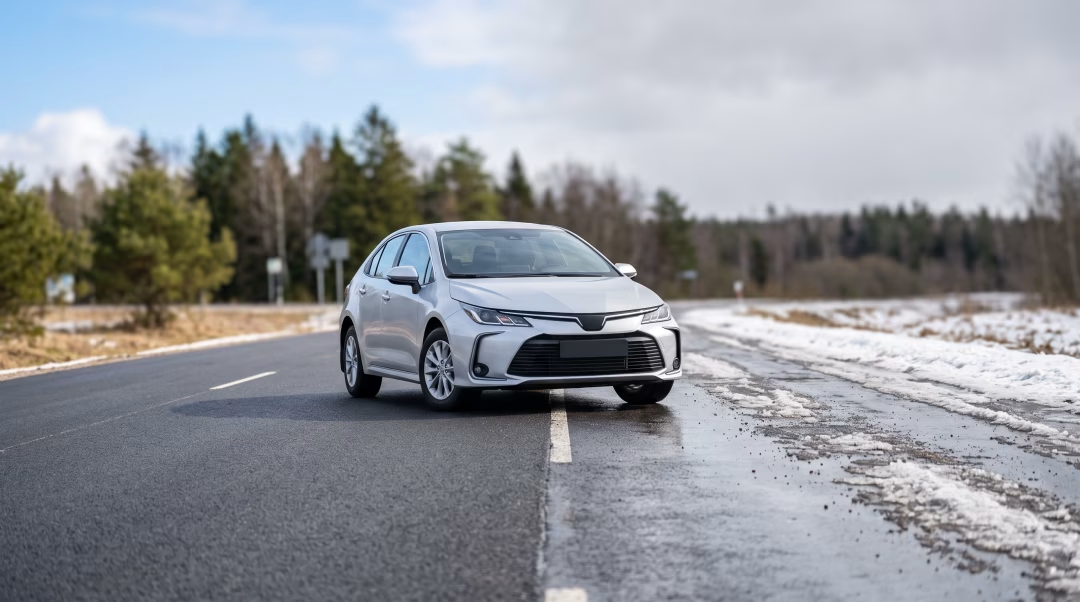
A Deeper Dive into Drivetrain Technology
When you browse through any vehicle listing, you will see terms like FWD, RWD, and AWD. These acronyms describe the drivetrain, which is the group of components that delivers power from the engine to the wheels. This choice is more than just technical jargon; it defines how your car grips the road, accelerates, and handles corners. Let us break down each system to give you a clear picture of what to expect from your next vehicle.
Understanding Two-Wheel Drive (2WD)
Two-wheel drive is the most common drivetrain configuration on the road today. As the name suggests, the engine's power is sent to only two of the vehicle's four wheels. This system is simpler, lighter, and generally more fuel-efficient than its all-wheel drive counterpart. However, 2WD is not a one-size-fits-all category; it is split into two distinct types: Front-Wheel Drive (FWD) and Rear-Wheel Drive (RWD).
Front-Wheel Drive (FWD)
In a front-wheel-drive vehicle, the engine sends power exclusively to the front wheels. This layout is prevalent in most sedans, crossovers, and minivans because it offers several practical advantages. By consolidating the engine and transmission at the front of the car, manufacturers can create more interior space for passengers and cargo. With the weight of the engine sitting directly over the drive wheels, FWD vehicles typically offer good traction in light rain and snow, making them a reliable choice for many commuters. If you are considering trading in your current car, you can value my trade online to see how much you can put toward an efficient FWD model.
- Pros of FWD: Generally better fuel economy, lower manufacturing cost leading to a more affordable price, and more spacious interior design.
- Cons of FWD: Can experience "torque steer" (a pull to one side) during hard acceleration. Handling is not as balanced as RWD, and it may struggle in very deep snow or on steep, slippery hills.
Rear-Wheel Drive (RWD)
Rear-wheel drive systems send the engine's power to the rear wheels. This configuration is the classic standard for sports cars, performance sedans, and many trucks and larger SUVs. By separating the tasks of steering (front wheels) and power delivery (rear wheels), RWD provides a more balanced weight distribution and superior handling dynamics. This results in a more engaging driving experience, especially on dry pavement. However, because the primary drive wheels do not have the engine's weight over them, RWD vehicles can be more prone to losing traction on slick surfaces like ice and snow.
- Pros of RWD: Excellent handling and balance, no torque steer, and often a higher towing capacity in trucks and SUVs.
- Cons of RWD: Reduced traction in slippery conditions compared to FWD and AWD. The driveshaft tunnel can intrude on interior cabin space.
Exploring All-Wheel Drive (AWD)
All-wheel drive systems are designed to provide maximum traction by delivering power to all four wheels. This technology significantly enhances a vehicle's grip on wet, snowy, or gravel-covered roads. Unlike four-wheel drive (4WD) systems found on rugged off-road vehicles, modern AWD systems are typically fully automatic. They use sensors to detect wheel slip and intelligently distribute power to the wheels that have the most grip, often without any input from the driver. This makes AWD an excellent choice for drivers seeking extra stability and confidence in all weather conditions. You can get pre-qualified today to see what AWD options fit your budget.
- Pros of AWD: Superior traction and stability in adverse weather, improved acceleration on slippery surfaces, and enhanced overall driver confidence.
- Cons of AWD: Higher purchase price, lower fuel efficiency due to extra weight and mechanical drag, and potentially more complex and costly maintenance over the vehicle's lifetime.
How to Make Your Decision
Now that you understand the mechanics, how do you choose? The best drivetrain for you depends entirely on a few personal factors. There is no single right answer, only the answer that is right for your unique situation.
1. Consider Your Local Climate: If you live in an area that frequently experiences heavy rain, snow, or ice, the enhanced traction of an AWD system can be a major safety and convenience advantage. For drivers in milder climates where severe weather is rare, the benefits of AWD may not outweigh the higher cost and lower fuel economy. A 2WD vehicle is often perfectly adequate for most conditions.
2. Analyze Your Driving Habits: Think about your typical commute. Is it mostly highway driving on well-maintained roads? An FWD vehicle would be an economical choice. Do you enjoy spirited driving on winding back roads? A RWD car might offer more fun. Do you frequently travel on unpaved roads or take trips to the mountains for recreation? An AWD vehicle would provide the necessary grip. You can even schedule a test drive to feel the difference for yourself.
3. Evaluate Your Budget: Your budget is a key consideration. AWD vehicles typically cost more upfront than their 2WD counterparts. They also consume more fuel and may require more expensive tire replacements and maintenance down the road. It is crucial to weigh the peace of mind AWD provides against these long-term ownership costs. Exploring our financing frequently asked questions can help you prepare your budget.
4. Match the Drivetrain to the Vehicle Type: Certain vehicle types are more commonly associated with specific drivetrains. Most family sedans and minivans are FWD, while performance cars and trucks are often RWD. SUVs and crossovers offer the widest range of choices, with many models available in both FWD and AWD configurations. As you browse our inventory, keep in mind how the drivetrain aligns with the vehicle's intended purpose.
Is all-wheel drive necessary in North Carolina?
While not strictly necessary for most drivers in North Carolina, AWD can be very beneficial. The state experiences heavy rain, occasional winter storms with ice and snow, and has diverse terrain from the coast to the mountains. AWD provides superior traction and stability in these conditions, offering an extra layer of safety and confidence, particularly for those in the western part of the state or who travel frequently.
Does all-wheel drive use significantly more gas than two-wheel drive?
Yes, AWD vehicles typically have lower fuel economy than their 2WD counterparts. The added weight of the AWD components and the mechanical drag from powering all four wheels means the engine must work harder, consuming more fuel. The difference is usually a few miles per gallon, which can add up over the lifetime of the vehicle.
Is front-wheel drive or rear-wheel drive better in the rain?
For the average driver, front-wheel drive (FWD) is generally considered better and safer in the rain. The weight of the engine is over the drive wheels, which helps them maintain grip on wet pavement. Rear-wheel drive (RWD) vehicles can be more prone to oversteer, or "fishtailing," if you accelerate too quickly on a slick surface.
Are AWD vehicles more expensive to maintain?
AWD systems can be more expensive to maintain over the long term. They have more complex components, such as a transfer case, differentials, and driveshafts, which can require specialized fluid changes and service. Additionally, it is often recommended to replace all four tires at once on an AWD vehicle to prevent damage to the drivetrain, which can be a higher upfront cost.
Can I still get good traction with a 2WD vehicle in winter?
Absolutely. A 2WD vehicle, especially a front-wheel drive model, can perform very well in winter conditions when equipped with the proper tires. A good set of all-season or dedicated winter tires will make a much more significant difference in traction and stopping power on snow and ice than the choice between 2WD and AWD with poor tires.
Helpful Links for Your Car Buying Journey
We are committed to making your experience as smooth as possible. If you have more questions about our dealership or the financing process, please explore some of the resources below:
- Learn more about us and our commitment to our community.
- Start your journey by filling out our secure online applications page.
- Have a specific question? Do not hesitate to contact us directly.
- Discover what is Buy Here Pay Here and how it can help you.
